Best HR Software for Small Business: Free vs Paid — Which One Actually Saves You Money?
Have you ever stared at your pc screen at 11pm wondering why you are investing your life into managing PTO requests on a shared google sheet? When looking for the best HR software for small business the first dilemma that occurs is whether to go for a free option or a paid option. Seems like an easy choice to make based on your budget, but sometimes it may cost you more by choosing the cheaper tool.
Yes, sometimes it is the case that you go for a paid option because it ends up being much cheaper than the free tool. But how can you know for sure? Let us compare and contrast these two options so you can make an informed choice.
Table of Contents
What “Free” HR Software Really Means for Small Business Owners
The primary way most free HR programs (such as the free plan for Bitrix24, HR Cloud, or any other tool) work is that they serve as lead magnets. The company wants to attract customers, and it makes an offer – a free product, which can be used for a limited time or with restricted functionality. This is done so that the client gets acquainted with the main features of the product.
The main reason why most of the free HR programs (free plan for Bitrix24, HR Cloud, or any other tool) are used by people is that they act as a lead magnet. Company A wants to attract new customers, and it offers them a free product (or uses the one they already have), which usually has certain restrictions (limited period of use or limited set of functions) so that the client can explore the main features of the product.
The Hidden Limitations Nobody Talks About
The significant part of functionalities that are not included in the Free Plan is connected to compliance and automation:
- Automated tax filings or generation of W-2/1099
- State-specific labor laws and regulations
- Audit trails of terminations or disciplinary actions
- Payroll or benefits providers’ integrations
And there’s a crucial detail that’s connected to this. The Department of Labor doesn’t care if you’re using a free plan or not – if you have employees and you have an employee classification problem, you’re most likely to face the consequences regardless of if you can afford it or not (DOL.gov).
What You’re Actually Paying For With Paid HR Software
Paid HR software is not what the free version of it would be, with more features turned on. The paid softwares are usually different products designed for companies that outgrow the need for something basic.
The main features that come with the paid options, that are not available in the free ones, include:
- Payroll with direct deposit and tax payments
- Benefits management – health insurance, 401(k) and more
- Performance reviews
- Automated onboarding that can cut hiring costs by 50%
- Powerful reporting and analytics tools about your hires, staff turnover and other metrics
Compliance and Risk Management: Where Paid Software Wins
This is the section most cost comparison articles neglect, and that’s the space where your legal exposure lives. The truth is, paid platforms increasingly bundle or integrate with compliance management software, letting smaller businesses benefit from capabilities previously only accessible to enterprises.
Look for platforms that include:
Auto-updating compliance management: Keeps your policies current at the state level when labor laws change
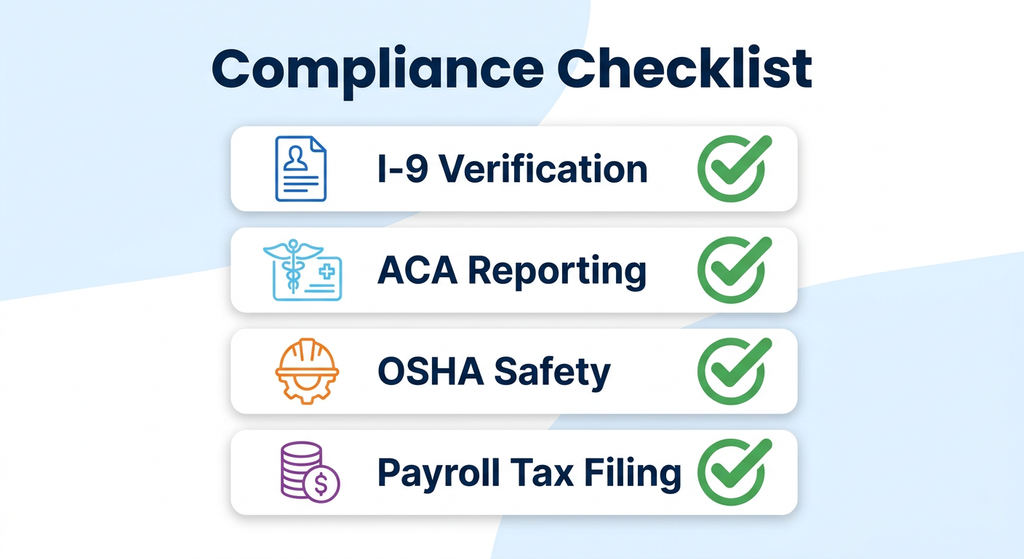
Compliance software for small business: Built-in checklists for I-9 verification, ACA reporting, and OSHA recordkeeping
GRC software (Governance, Risk, and Compliance): Add-on modules for smaller operations (50+ employee threshold is dissolving)
(Per SHRM’s research on HR technology adoption , compliance automation is now one of the three most common reasons small businesses switch from free to paid tools. Not that it’s convenient, but it’s risk mitigation with a monthly bill.)
Free vs Paid HR Software: A Real Cost Comparison
Let’s put actual numbers next to this instead of vague statements like “it depends.”
| Factor | Free HR Software | Paid HR Software |
|---|---|---|
| Monthly cost | $0 | $6–$15/employee/month (avg.) |
| Payroll tax filing | Manual, DIY | Automated |
| Compliance updates | Rare/none | Continuous |
| Employee capacity | 5–25 (capped) | Unlimited (tiered) |
| Support | Community forums | Dedicated support |
| Integration with benefits providers | Limited | Extensive |
The True Cost of “Free” (Hidden Costs)
Here’s the scenario I’ve seen play out in real life: A 12-person company invests in a free HR tool and uses it for two years. It works fine, except for an employee audit where they discover overtime hours were misclassified for 18 of the last 24 months. The back pay, penalties, and litigation costs associated with that error will easily exceed $100,000 – far more than the $10/month/employee it would have cost to use a premium tool.
The other cost of using free software is the opportunity cost of your time. If your HR administrator (read: founder) spends 5 hours per week entering data a free tool could handle automatically, that’s 260 hours of your time per year – or $40/hour value of your time, that’s over $10,000 in opportunity cost if you’re billing at $50/hour.
ROI Breakdown: When Paid Software Pays for Itself
In what scenarios does paid HR software justify its cost?
If your team regularly exceeds 10 employees
You work in a highly-regulated industry (healthcare, finance, construction)
Your business operates in multiple states (each with their own regulations)
Or you’re currently in a hiring surge and need faster onboarding,
free options might actually be the more prudent choice.
This is a non-answer most providers would prefer you didn’t consider.
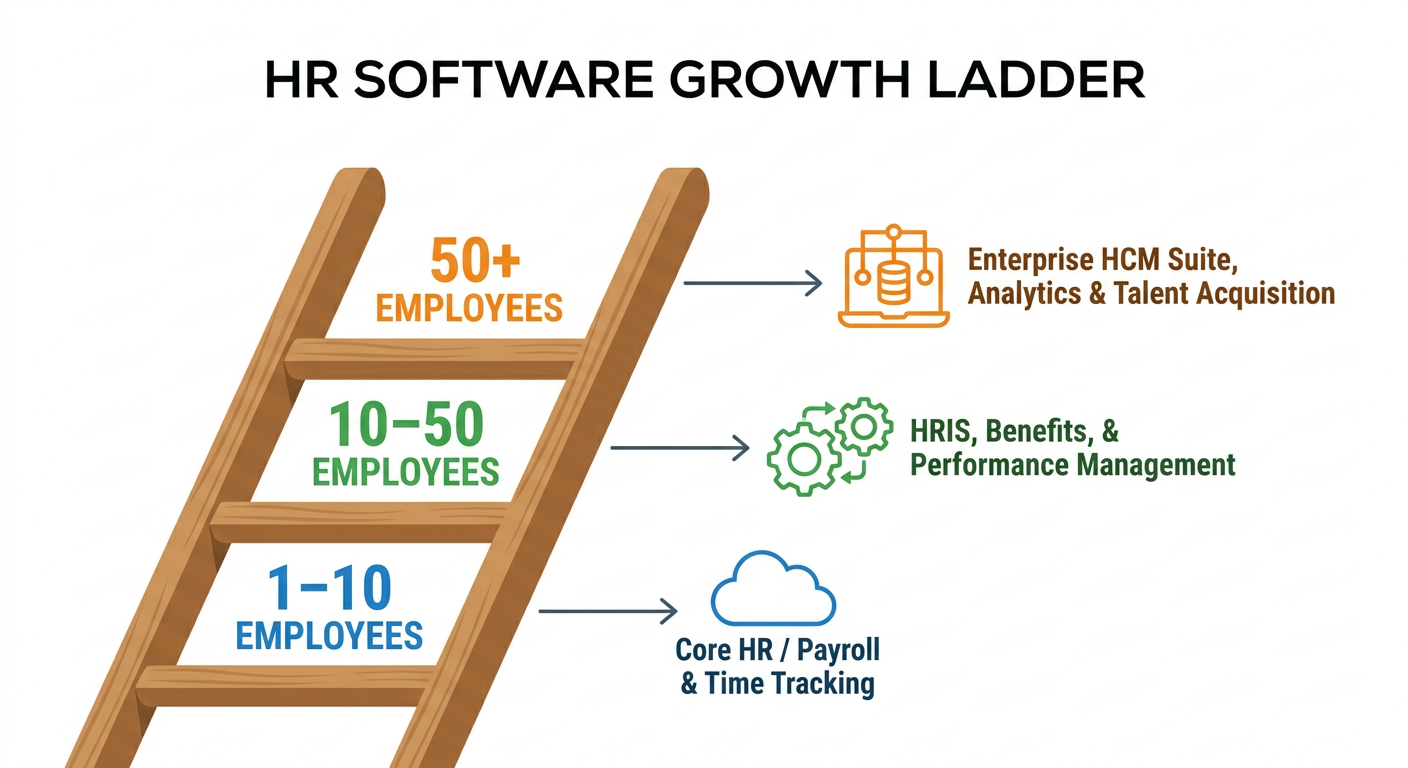
How to Choose the Best HR Software for Small Business Based on Your Stage
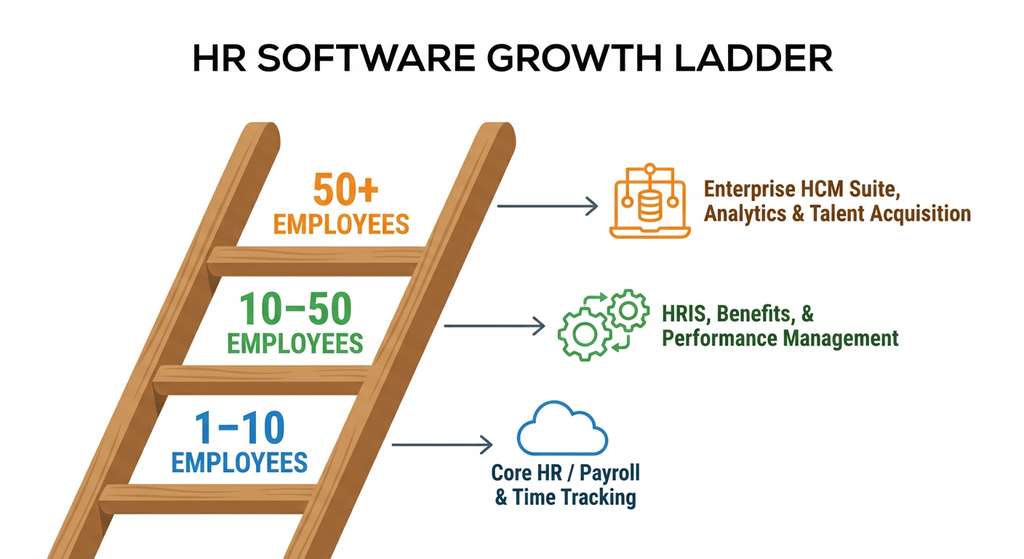
Under 10 Employees
Stick with free or low-cost tools. Your compliance exposure is smaller, and simplicity beats features here. Just set a calendar reminder to reassess every 6 months as headcount grows.
10–50 Employees
This is the danger zone where free tools stop being “enough.” Compliance risk rises sharply, and you likely need automated compliance management and payroll integration. This is usually where businesses migrate to a paid platform.
50+ Employees or Scaling Fast
At this stage, you genuinely need GRC software features — audit trails, policy version control, and reporting dashboards for leadership. Manual processes here aren’t just inefficient; they’re a liability.
For a deeper breakdown of which HR platforms fit each growth stage, our team put together a detailed HR software comparison guide that walks through pricing tiers by company size.
Red Flags to Watch For When Evaluating HR Software Vendors
Before choosing a particular platform (both free and paid options should be considered), be on the lookout for:
Vague compliance mentions (“Fully compliant” without specifying the laws and states)
Lack of export options (the ability to take your data with you should always be an option)
The cost structure that exponentially grows with the number of employees
The absence of relevant certifications (like SOC 2 and others)
A questionable response to your request for details about the fate of your compliance data in the case of cancellation. The most credible vendors are usually listed on websites like G2 and Capterra .
Conclusion
When it comes to the free vs paid best HR Software for Small Business debate, there is no clear ‘winner’. In many ways, it all depends on the size of your team, the level of risk of non-compliance, and the value of your time. Free tools are great for single-employee businesses that do not have any particular compliance needs.
However, once you start hiring more people, get involved in multi-state employment, or simply operate in a highly-regulated industry, paid software that promises compliance management solutions becomes significantly more cost-effective, frequently preventing thousands of dollars in penalties and fees. The right choice is not about finding the cheapest option but prioritizing the tool that considers your particular needs.
Frequently Asked Questions
1. Can small business owners safely use free HR programs for an extended period?
Such software is appropriate for managing the records of only small companies (with the number of employees below 10). Software of this type is not recommended for long-term use due to limitations in features designed to comply with regulations while allowing to manage larger employee bases (particularly when benefits and multi-state payroll needs emerge).
2. What is the average expenditure on paid programs that small business owners can afford?
On average, most entry-level solutions cost between $6 and $15 per employee and a base plan cost (between $20 and $50 per month). The range depends on the selection of features available (payroll and benefits management) and the number of employees covered by the selected solution.
3. Is it possible to transition from free HR software to a paid version without losing employee data?
Generally, it is possible since most companies in this sector offer CSV import and API access to core data to facilitate the process. It is advisable to consult software vendors directly to identify export options in the free plan and the ability to migrate this information to the paid version.
4. Is compliance software necessary for small business owners with only 5 employees?
This category of software products is not completely unneeded for small organizations with reduced headcounts. However, only particular industries (healthcare, finance, construction) require extensive regulatory oversight that necessitates compliance software even with a small employee base.
5. How do compliance and GRC software differ in terms of application?
GRC (governance, risk, and compliance) solutions target larger companies (50+ employees) and address multiple regulations and risk areas beyond just compliance management. For smaller enterprises, GRC software is not available due to its higher cost and complexity.