5 Signs Your Startup Is About to Lose a Big Client Because You Don’t Have SOC 2 Compliance Software
You’re on your third call in a series that will land your largest deal of the year. The champion at the other end of the conversation loves your product. The budget has been approved. But then, it turns out their security team sent a 40-page questionnaire to your email, and everything comes to a grinding halt. Does this sound familiar?
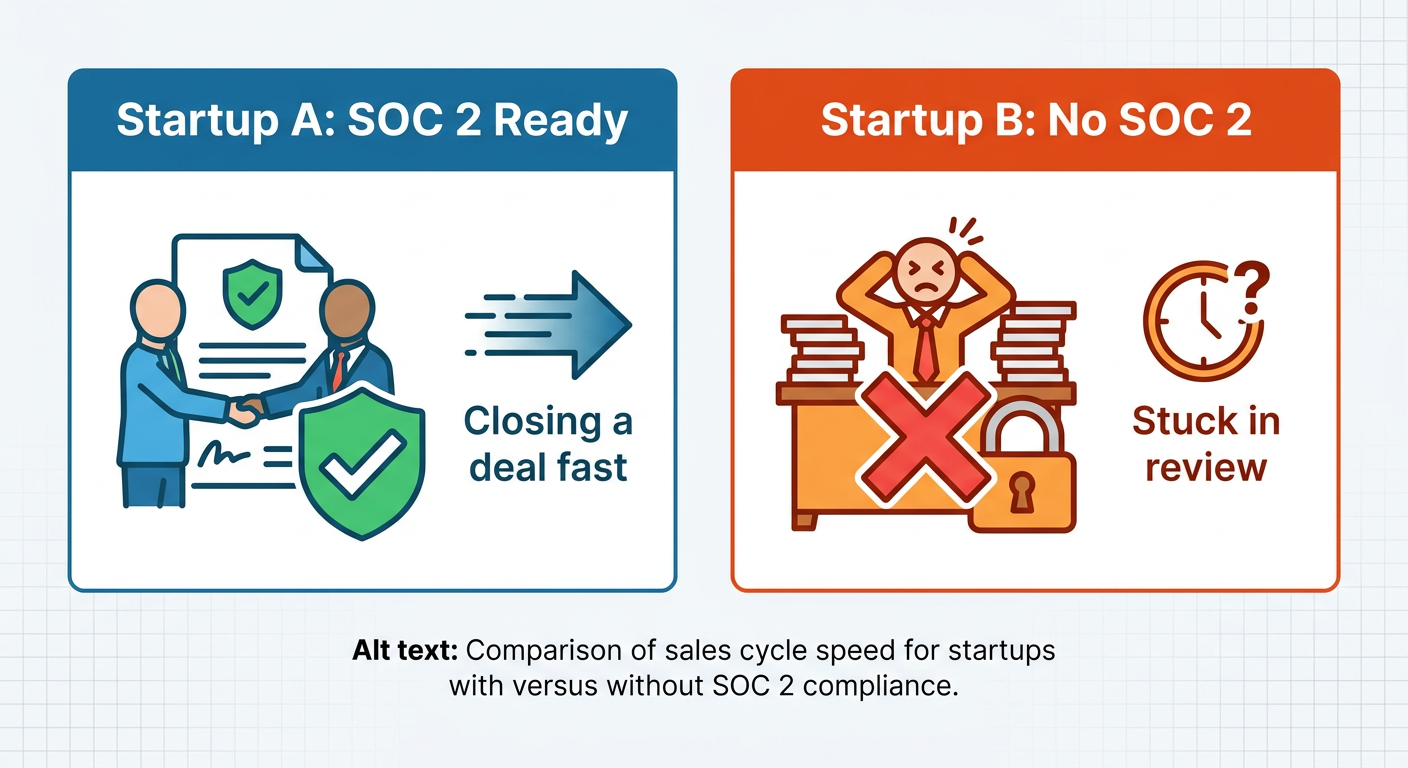
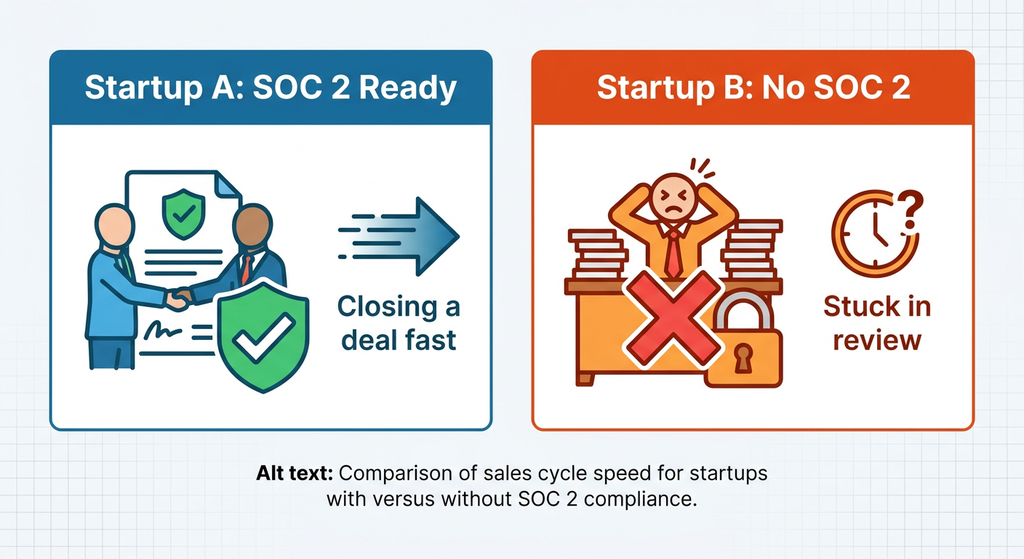
The thing is, the SOC 2 compliance software is not something that can wait for better times. It turns out, for many B2B SaaS companies that sell into mid-market and enterprise, the ability to demonstrate compliance is often the difference between the deal being signed or left unsigned.
I’ve seen it happen too many times – a competitor’s product, which was somewhat better, closed the deal because the sales engineer was able to provide the necessary documentation on the spot, while our candidate had to spend two weeks preparing for the next stage. What are the warning signs that the prospects need SOC 2 compliance software, and how can we address them in time? Let’s discuss.
Why Enterprise Clients Suddenly Care So Much About SOC 2
The Shift from “Nice to Have” to “Deal Breaker”
A few years ago, the phrase SOC 2 only crossed the lips of healthcare and finance executives. Not so much anymore. As breaches increasingly make the news and enterprise buyers become victims of poor vendor security, procurement departments are becoming much less forgiving. The reason lies in what the AICPA, which created the SOC 2 standard, says the report is designed to achieve: to provide confidence to a customer that an organization has the appropriate controls related to the security, availability, and confidentiality of information. In other words, enterprise buyers are coming to view a SOC 2 report as a given, like references or case studies, says AICPA.
What SOC 2 Actually Proves to a Buyer
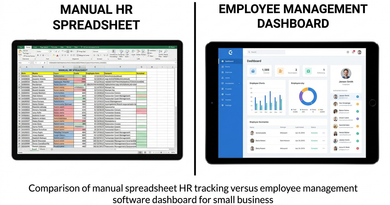
Here’s what many pre-seed/pre-series A founders misunderstand about SOC 2: it is not an exercise in demonstrating “security posture”. It is an exercise in demonstrating auditable, repeatable, documented controls around access management, incident response, data encryption and other facets. The security team of the buyer will not be satisfied with your pretty words. They need to see documented evidence that you actually do what you claim you do. And the only way to do that is to abandon the approach of using Excel sheets and folders with screenshots of various dashboards.
5 Signs Your Startup Is About to Lose a Big Client
Sign #1 — Their Security Questionnaire Just Got Longer (and Scarier)
If the questionnaire used to be a five-question, hour-long affair and now looks like a college entrance exam, this is an especially strong signal that the company has burned itself previously. If they are asking about the methodology of penetration testing or demanding to know where you host your data retention policies, subprocessors, and breach disclosure timelines, do not attempt to explain. You will need a compliance management software to keep track of your responses if you want to avoid losing the deal.
Sign #2 — Legal or Procurement Showed Up
The fact that suddenly your single contact at the customer base is proliferating into a committee of legal, procurement, perhaps even CISO is usually an unmistakable sign that your sales pitch crossed some compliance threshold. The most likely explanation is that your prospect is concerned about the control requirements in their purchasing decision. They simply want reassurance that their lawyers will not be reviewing the contract with you three times a week.
Sign #3 — They Want a “Report” That Sounds Nothing Like That
Nobody knows what the hell a SOC 2 Type II compliance is until they have to provide one. If your customer’s lawyer or procurement specialist just asked you for your SOC 2 Type II or even raised the subject of a report in conversation, you might be losing the deal. In any case, there is nothing wrong with telling them that you do not have that, or at least not yet. However, you should consider getting that “SOC 2 in progress” bridge letter ready if you want to keep your prospects in good standing.
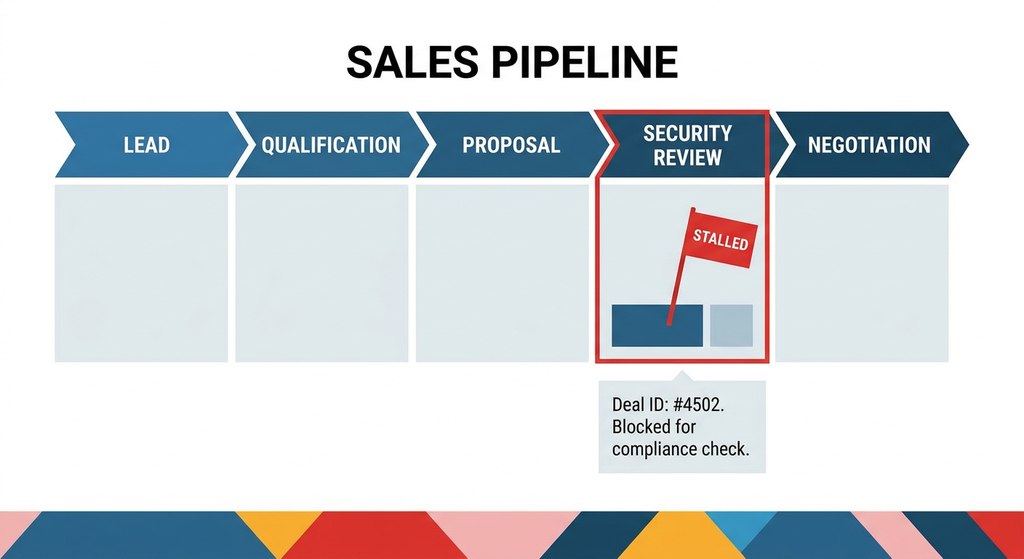
Sign #4 — Your Deal Is Going “Internally Internally Internally…
One of the things that we do at Cogsworth is keeping track of these “final reviews.” The deal might appear dead, but in reality, it is in purgatory. If your customer started responding with “we will get back to you once we finish the internal review” or something similar, it could be a sign of poor salesmanship on your prospect’s side. It is also indicative of the fact that some compliance concerns emerged after your sales presentation and a “just let us finalize it” response is the best remedy available.
Sign #5 — Your Competitor Has an SOC 2 Report Already
This is, perhaps, the most actionable insight for your sales representatives, as prospects usually do not conceal the fact that they are talking to others. If your sales rep casually mentioned to his prospect that “Competitor X is already compliant with SOC 2,” the prospect might follow up with “well, we’re also talking with X, they already have their report ready.” In essence, you are looking at a tie-breaker scenario, where the choice between two similar products is being made. And more often than not, the deciding factor is going to be the compliance because nobody wants the headache of a vendor risk assessment.
How SOC 2 Compliance Software Prevents These Deal-Killing Moments
Automated Evidence Collection vs. Manual Screenshot Chaos
The majority of founding teams make the critical mistake of thinking that SOC 2 is an audit-ready event. In reality, it is an ongoing operational capability. SOC 2 compliance software (Vanta, Drata, Secureframe, etc.) helps teams continuously collect evidence from your cloud stack, human resources, and code repositories. It dramatically improves upon the status quo of teams using screenshots of their AWS console as evidence during SOC 2 audits.
Continuous Monitoring: Staying Audit-Ready Year-Round
The ability to stay compliant throughout the year, rather than just ahead of your annual audit, is critical to reducing the overhead of being SOC 2 compliant. Rather than finding out about a misconfigured S3 bucket that became public facing through your AWS console, good compliance software will detect that change in near-real time.
Compliance Software vs. GRC Software – What’s the Difference?
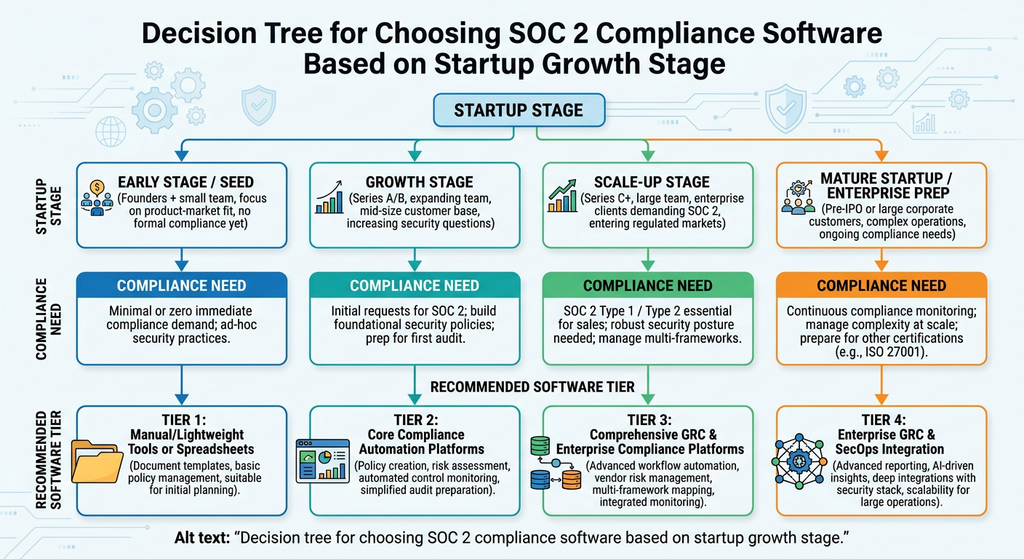
We would be remiss not to address the difference between compliance and GRC software. As mentioned, SOC 2 compliance (and similar standards) are typically focused around the collection of evidence around a particular set of controls. Compliance software usually focuses on a single standard (or sometimes a few similar ones), while GRC software typically spans across multiple standards, and also includes risk and governance-focused capabilities. Additionally, most early-stage startups won’t need a GRC platform to begin with, and should instead invest in a compliance-focused piece of software that can help track and report on the controls and evidence required for the standards they plan to get certified against.
What Early-Stage Startups Need to Know When Choosing Compliance Management Software
What Founding Teams Should Prioritize Before Series A
If you’re a pre-Series A startup beginning to see enterprise prospects in your sales pipeline, understand that the needs of a five-person founding team are drastically different than a five-person product team. Here are some things to look for when choosing compliance software:
Automated evidence collection from your cloud stack, code repositories, and human resources systems
Evidence templates for SOC 2 standards that can be easily customized, rather than building something from scratch
Auditor marketplace or certification reporting capabilities (Many compliance-focused software vendors have relationships with third-party auditors who can perform your SOC 2 audit)
Tracking of employee onboarding/offboarding to make sure that system access is granted and rescinded timely (one of the most commonly failing controls among early-stage startups)
When Founding Teams Should Move to Full Automated Compliance Management
As you move to later stages, or build products or services that are regulated by more than one standard (e.g. SOC 2 and HIPAA), you may want to consider more robust automated compliance management tools. These can help you avoid the overhead of managing controls, evidence, and documentation across multiple standards.
What to Watch Out For When Shopping Around for Vendors
Here are some red flags to watch out for when meeting with vendors:
Pricing is only available after long discovery calls (often a sign of a hidden implementation fee)
Software doesn’t integrate with your cloud stack (AWS, GCP, etc.) or development stack
Limited resources to actually talk to a person during your audit window
No transparency around which auditors they work with
For a deeper look at how compliance tooling fits into broader financial and operational systems for growing companies, check out this related resource on compliance management for scaling startups and this guide on choosing risk-aware business software from Moneticks.
Conclusion
Losing a deal due to a compliance gap may be more devastating than you think. In fact, it is entirely preventable. The five warning signs discussed above are part of the process during which enterprise buyers determine whether you are a reliable vendor or not. The right SOC 2 compliance software can transform painful and demoralizing situations into opportunities to demonstrate your viability as a seller. If any of the discussed warning signs resonate with your own situation, it is time to start looking for the appropriate solution.
Frequently Asked Questions
1. How long does it take to get SOC 2 compliant using compliance software?
Startups using dedicated SOC 2 compliance software can go from audit-readiness in 2-4 months (for Type I), and then need another 3-12 months of operations before they can get a Type II report (since it assesses ongoing effectiveness of controls)
2. Is SOC 2 compliance legally required for startups?
Not technically but it is increasingly becoming a contractual obligation as many enterprise customers are now requiring it as part of their due diligence. In practice this means it is a de-facto requirement for any B2B SaaS business targeting mid-market and enterprise sales.
3. Can I get SOC 2 compliant without buying software, just using spreadsheets and manual processes?
While it is possible it is strongly advised against. The process of creating and maintaining the controls around data security and privacy is ongoing and auditing them manually creates risks of missing something, not to mention the opportunity cost of the person(s) spending 50-100+ hours a year on this work.
4. What’s the difference between SOC 2 Type I and Type II, and which do enterprise clients want?
Type I is a snapshot assessment of whether controls are suitably designed, while Type II is a 3-12 month assessment that these controls are operating effectively. Almost all enterprise customers will require Type II since it confirms controls are working not just theoretically but in practice.
5. How much does SOC 2 compliance software typically cost for a small startup?
It can range from $7,000 to $30,000 depending on your budget, headcount and what controls you need to document. Early-stage startups should have access to most of the essential functionality at the lower end of the spectrum. On top of the software cost you will also need to budget for external auditor fees ($10,000-$40,000 range depending on your revenues and complexity of controls)