
Regulatory Compliance Software: Can AI Automatically Track Every Regulatory Change That Affects Your Business in 2026?
The software for regulatory compliance has become one of the most sought after B2B tools this year 2026 because it helps manage the ever-growing list of data privacy, labor, and industry-specific regulations. This is because they help to keep employees and customers safe and ensure that businesses avoid the costly penalties that come with non-compliance.
Many companies have been tracking these changes on spreadsheets and Google Sheets, but the costs of mistakes are becoming too high. Regulation changes more frequently now and remains challenging to monitor, especially with a limited staff and budget. Can AI technology help track every regulation change that affects a business and keep organizations updated automatically? In this article, I will discuss everything about regulatory compliance software, including the key considerations when choosing the best tool for a business.

Table of Contents
What Is Regulatory Compliance Software (and Why Everyone’s Suddenly Talking About It)
Let’s start from the beginning. Regulatory compliance software falls under the umbrella term for systems that help companies to track, manage and demonstrate conformity with applicable regulations and internal rules, such as data privacy laws, work environment norms, financial disclosure rules or any other standards this industry-specific.
In other words, compliance management software helps organizations keep up with constantly changing regulations and guidelines. It does so by tracking the relevant legal sources and analyzing them to create up-to-date reports on the necessary changes to the company’s policies.
The Problem of Compliance Management for Small Organizations
The issue with many small businesses, especially in the current year and the years to come, is that regulatory requirements are only going to become more numerous and more strict. From new data privacy laws emerging in various states, inspired by the California Consumer Privacy Act, to requirements specific to certain industries, such as health or finance, there is a lot for the organization to keep track of. These laws are complicated and multifaceted, and any mistakes or non- conformities may lead to severe penalties or even loss of clients.
Small businesses, in particular, do not have access to an in-house lawyer, to advise them on the necessary precautions and documentations, while big corporations do. This is why small business compliance software became so popular, as it helps such organizations keep up with the necessary regulations and protect themselves from mistakes.
Compliance Management Software vs. Keeping a Spreadsheet
Compliance management software is not simply a spreadsheet, where one can keep track of important changes
Such programs offer regulatory support by providing the companies with the up-to-date list of regulations, relevant to their field of business. Apart from the automatic updating feature, compliance management software usually includes a few other functions, such as the assignment of responsibilities, task force creation and audit control. Other features could also be available, depending on the program.
In conclusion, if one tries to keep track of regulatory changes manually, the results are most probably not going to be very satisfactory. Small businesses should consider investing in small business regulatory compliance software, to ensure they remain compliant and on track with the ever-growing list of internal and external regulations. If you think that keeping track of a spreadsheet yourself would be a better option, than you are most probably mistaken.
Can AI Really Track Every Regulatory Change? The Honest Answer
Here is the honest truth: AI is not able to track every regulation change with 100% accuracy and cover all the applicable jurisdictions. Any company promising you this is not telling the complete truth. However, AI-driven software is often capable of doing something very close to that: detecting every relevant change with a high level of accuracy.
What AI Can Do Best
The modern regulatory tracking software makes use of natural language processing to comb through thousands of regulatory bulletins and documents in search of any applicable changes. This process, which used to take years for a compliance officer to complete, is now done in a matter of minutes by AI.
- The technology is particularly good at
- Identifying any changes to the regulations,
- Narrowing down the list to only those changes that may affect the user,
- Summarizing the amendments in plain language,
and ensuring there are no gaps in regulatory coverage as mandated by compliance officers. The field has seen a proliferation of such compliance software, developed by major firms like Thomson Reuters and Wolters Kluwer, who have the know-how to build tools which fulfill these requirements.
What the Software Can Not Do (And Why It Does Not Advertise It)
The most common weak point in AI-driven regulatory discovery tools is jurisdiction-specific oversight. A large number of regulations are still county-specific, or only apply to certain industries, and there are enough nuances for different compliance managers to find relevant changes and irrelevant ones nevertheless.
Additionally, while the software is great at identifying any changes, it is not always obvious what action must be taken to comply with the new regulations, and this may require human expertise. The technology also often struggles with false positives: when it detects a change that did not actually take place, or is only planning to take place.
Finally, many companies operate across jurisdictions and have to weigh conflicting regulations: a company with operations in ten states only has to follow the most stringent rules of each, and an AI may struggle to identify which one is which. Thus, it is hard to completely replace a human with such a tool, but using it to highlight potential problems and then performing a once-a-year check by a human expert is a viable solution.
Automated Compliance Management — Features That Actually Matter
Not all platforms are created equal, and plenty of tools slap “AI-powered” on their landing page without much substance behind it. Here’s what to actually look for.
The Must-Have Feature Checklist
- Real-time regulatory alerts filtered by industry and jurisdiction
- Policy mapping that links each internal policy to the specific law it satisfies
- Automated audit logs for painless reporting during inspections
- Risk scoring that prioritizes which changes need urgent action
- Integration capabilities with your existing HR, finance, or document management systems
- Employee training modules tied to new compliance requirements
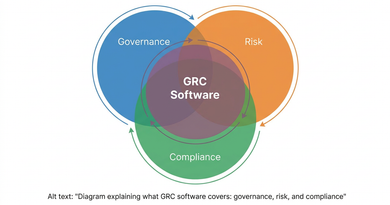
If a platform is missing more than one or two of these, it’s probably a glorified checklist app, not true GRC software (Governance, Risk, and Compliance).
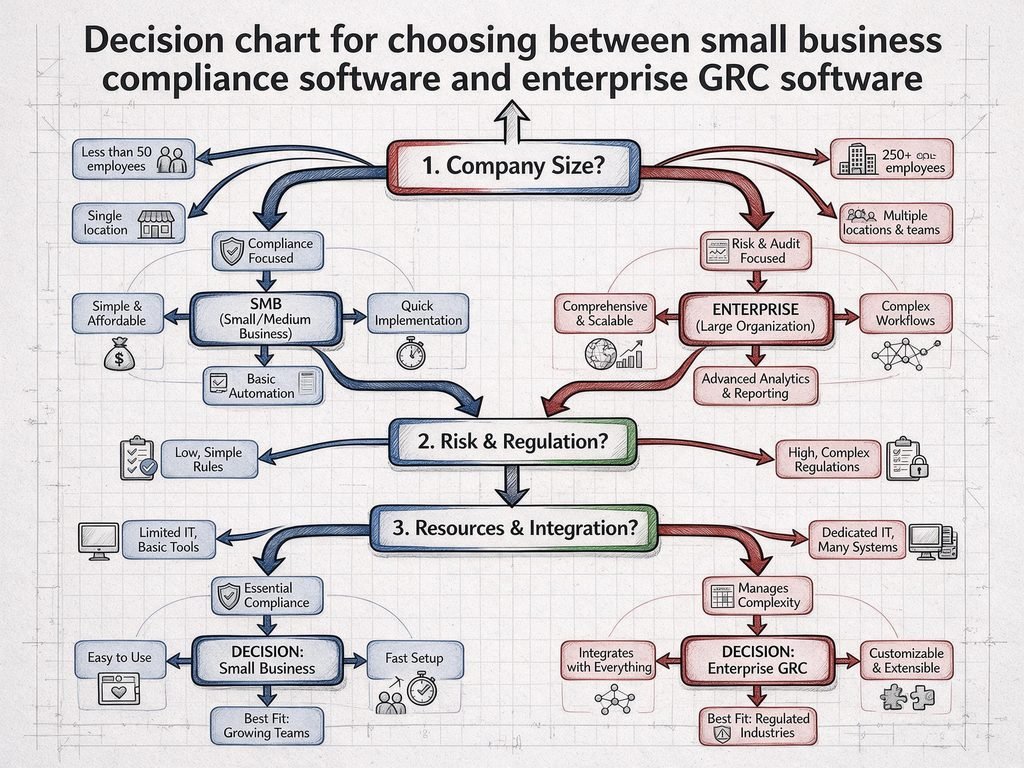
Compliance Software for Small Business vs. Enterprise GRC Software
| Feature | Small Business Tools | Enterprise GRC Platforms |
|---|---|---|
| Price | $50–$300/month | $10,000+/year |
| Setup complexity | Low, plug-and-play | Requires implementation team |
| Jurisdictions covered | Usually U.S.-focused | Global, multi-jurisdiction |
| Customization | Limited templates | Fully customizable workflows |
| Best for | Startups, SMBs, single-state operations | Multinational corporations, regulated industries |
If you’re running a lean team, don’t overbuy. A tool built for compliance software for small business needs is often faster to implement and cheaper to maintain than a sprawling enterprise GRC suite you’ll never fully use — a lesson we’ve also seen play out in other operational tools, like the ones covered in our guide to employee management software for small business.
How to Choose the Right GRC Software Without Getting Burned
Choosing compliance software is much like shopping for insurance — it has the unpleasant air of something you want to avoid until you actually need it. But put on the brakes before you sign anything.
Questions to Ask Before You Buy Compliance Software
If you’re shopping around, ask yourself these questions first:
- Does the platform have pre-built regulatory requirements for my industry (HIPAA, PCI-DSS, etc.)?
- How quickly does it update when new regulations come out? (ideally within hours)
- Can I see the tool in action on a similar business profile?
- What does the tool do if a regulation is falsely reported or overlooked entirely?
- Does the vendor offer expert compliance guidance, or is it all self-service?
And these are the red flags that tell you to run the other direction.
- Vendors who can’t explain how their A.I. acquires its regulatory data
- No free trial/demo
- Pricing that seems too good to be true for the number of jurisdictions it claims to cover
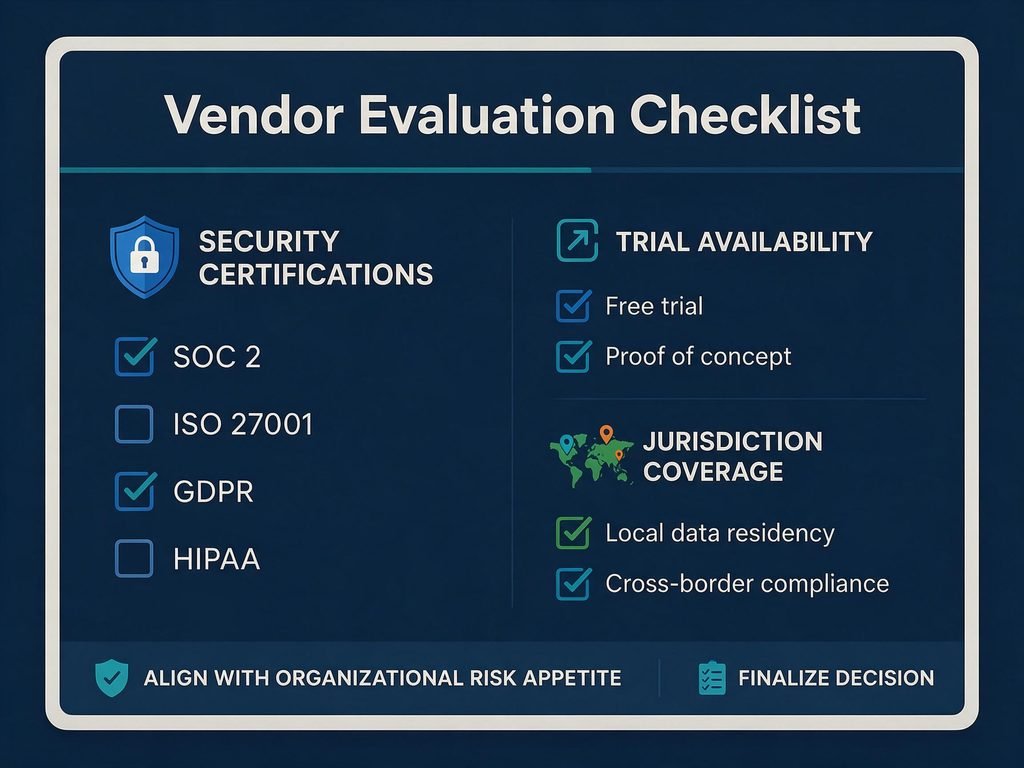
- No mention of cybersecurity certifications like SOC 2 or ISO 27001
- Customer reviews complaining that vital updates were missed with no redress
For data-handling standards, you’ll want to know that any reputable compliance software vendor will be able to meet the requirements set out in the NIST Cybersecurity Framework and ISO 27001 standard.
Conclusion
So can AI track every single regulatory update that pertains to your business? Mostly, and that mostly is a huge improvement on the state of affairs even five years ago. Regulatory compliance software can do that monitoring faster, across more sources, and with fewer false positives than a lone human can, but it’s rarely an improvement to double down on in-house legal research and analysis for regulatory compliance.
The most cost-effective plan for most small businesses is to combine some form of automated regulatory compliance management software with periodic human review and adjustment, rather than trying to lean on one or the other exclusively. The right software can provide speed and automation without sacrificing the judgment and nuance only people can bring to the task, while also being far more affordable than most large-scale enterprise software would be for a single small business.
Frequently Asked Questions
1. Is it worth buying compliance software for small business, with a staff size of less than 10 people?
In most cases, yes. Even small companies actively working in fields that have regulatory oversight (healthcare, banking, or others that collect and store customer information) see a strong ROI in these programs. The standard entry-level plan for a small team of this size typically costs between $50 and $150 per month, while a fine (or consultant’s hourly rate) can quickly exceed this amount.
2. What is the main difference between compliance and GRC software?
GRC software typically refers to a larger classification of programs that take into account elements beyond the pure regulatory requirements, such as internal risk management and controls, and are generally used in larger enterprises.
3. Can I trust compliance software to fully prevent regulatory issues, or are there things that it still misses on a regular basis?
It is possible to miss some subtleties of continuously evolving regulations, even with the use of AI. However, a properly configured system will prevent any major changes from catching you off-guard. That said, the responsibility for interpreting and implementing rules always lies with your team – not the software.
4. How up-to-date is the information in compliance software, and how frequently is the database refreshed?
Most products in this space either update the database on a rolling basis or have scheduled refreshes no later than once per day, as compliance regulations rarely change, but when they do – it is usually in real time. A trusted software partner should be able to advise you on how often the database updates its library of regulations.
5. Do I still need a lawyer to consult with if I have a compliance software program to keep track of regulations?
If the software is up to date and properly maintained, then it should be possible to replace a large part of your in-house or outsourced regulatory team. However, nuances in applicable laws and regulations still require human analysis. Consulting with external experts such as lawyers or an outside compliance manager is mandatory if your company plans to make any significant changes in the first year after installation or make meaningful changes in your line of business.