
Best GRC Software by Industry: What Healthcare, Finance, and SaaS Companies Actually Use
Ask a hospital administrator, a fintech executive, and a SaaS CTO what “compliance” software they need and you will get three different answers. That is why finding the best GRC software without an understanding of nuances specific to your industry is like asking what is the best car you can buy without specifying whether you need something that can carry construction equipment or something capable of driving on the track. The healthcare industry deals with HIPAA audits, financial auditors care about SOX and PCI-DSS, while SaaS companies have to finish their first SOC 2 audit before closing a deal with a enterprise client.
In this article I will discuss what needs to be the priority for different industries dealing with compliance, what solutions are frequently being used by these industries and explain what to look out for when choosing between the available options.
Table of Contents
Why “Best GRC Software” Isn’t One Size Fits All
What is Best GRC Software Used For
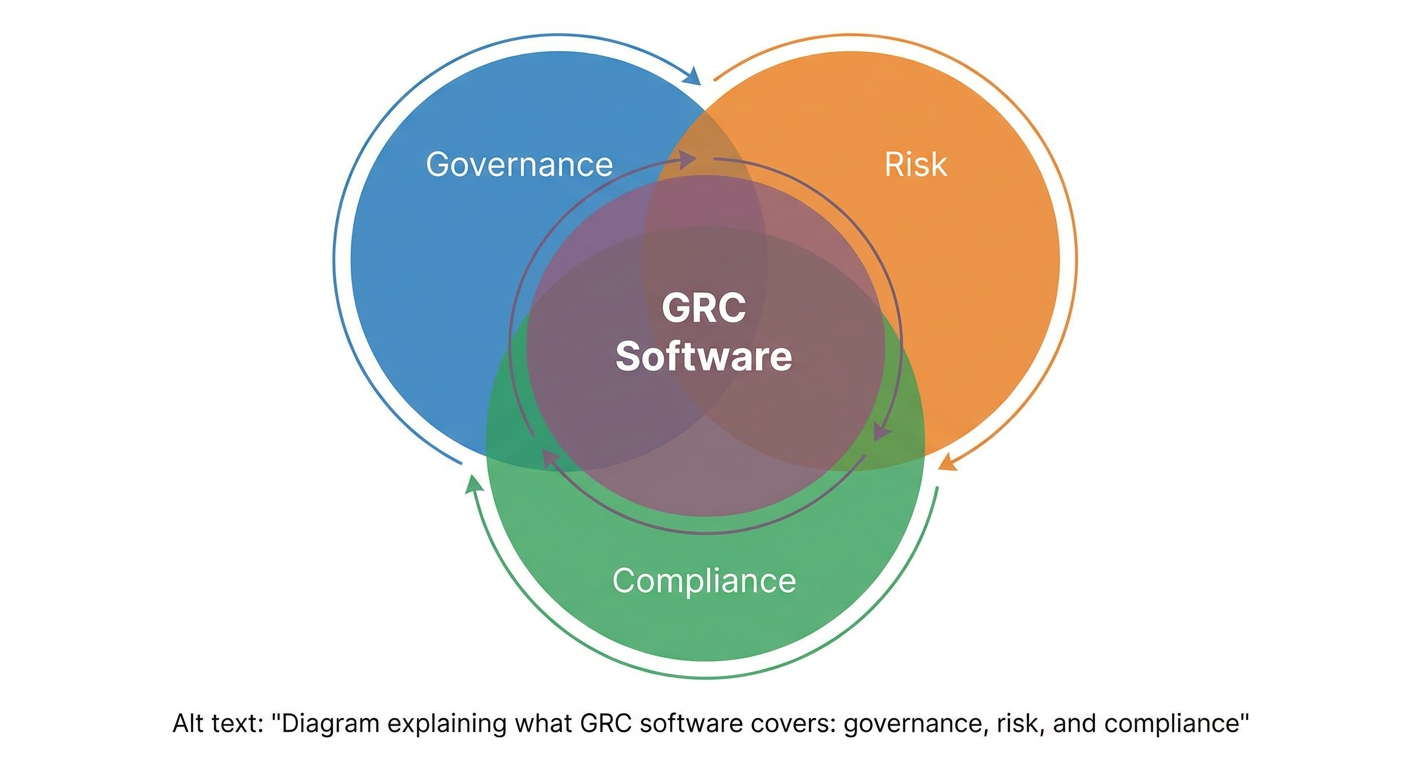
Let’s review the basics first since this acronym gets tossed around rather loosely. GRC software is a collective umbrella term for Governance, Risk, and Compliance – three distinct, but related operations that used to be run out of various spreadsheets before they got grouped together in a GRC platform. Effective GRC software should include:
Policy administration features to author, update, and distribute internal policies
Risk assessment functions to identify and score organizational risks
Compliance management tools to select controls based on regulatory frameworks
Audit trail capabilities to document control effectiveness
In short, GRC software turns a fire extinguisher into a full-scale fire safety system – it’s about having the right collection of tools
Why Industry Specificity Matters More Than You Think
The key problem with any “best GRC software” roundup is that these tools tend to be selected based on superficial factors rather than actual needs. In practice, the frameworks a GRC software solution supports are significantly more important than generic “features”. A GRC platform that scores five stars on G2 for HIPAA compliance could have terrible reviews from SOC 2 auditors or finance teams – and that’s completely normal. Tools built for large enterprises have little relevance to small businesses, and vice versa.
Best GRC Software for Healthcare Companies
What Healthcare Compliance Actually Demands
Organizations providing healthcare services have one of the highest levels of regulation due to HIPAA (Health Insurance Portability and Accountability Act) and HITRUST certification for larger entities. The problem is that the Office of Civil Rights (OCR) continues to report increases in HIPAA settlements and civil penalties annually, with several major organizations being fined over a million dollars for deficiencies in their HIPAA safeguards.
- Healthcare GRC solutions usually involve:
- Patient privacy and access management (tracking who viewed which information)
- Business Associate Agreement management for third-party vendors
- Enterprise risk assessment around EHRs
- Notifying breach and incidents according to HIPAA guidelines
Tools in Healthcare Compliance Space
There is a reason why most healthcare organizations, including small independent practices, choose to use HIPAA-compliant solutions like Compliancy Group or Accountable HQ over other GRC tools. Even medium-sized organizations often seek to avoid the complexity of using generic GRC software with a set of instructions that apply to healthcare only.
What I noticed in my experience is that the least complex option is usually the most in-demand for independent medical practices and small corporate networks that provide healthcare services. It is always better to select a tool that has the most relevant and up-to-date regulations in relation to HIPAA Security Rule rather than a solution with a more significant amount of required customizations.
Best GRC Software for Finance and Fintech Companies
Why Financial Services Face a Different Risk Profile
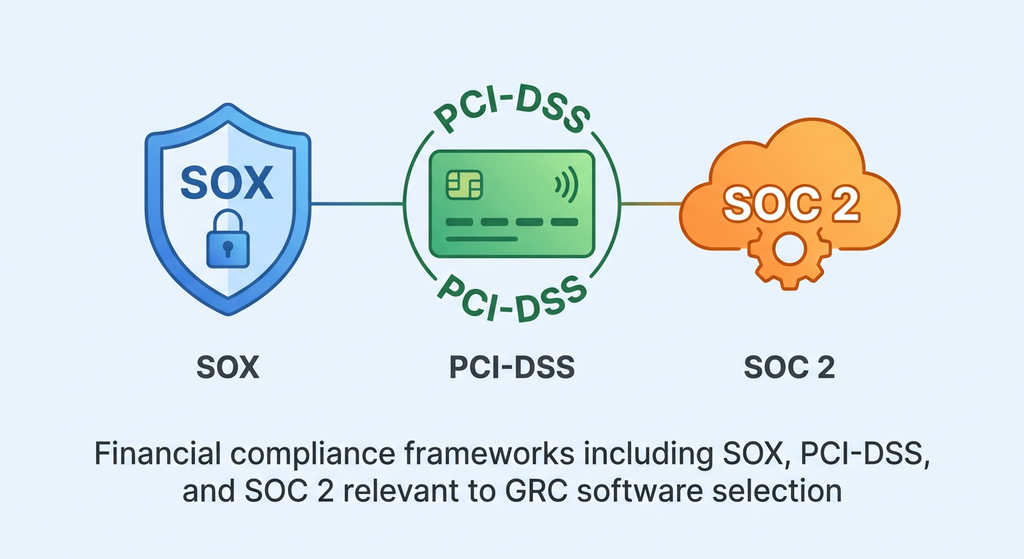
Finance and fintech companies operate under a different set of regulations focused on protecting financial data and preventing fraud. Depending on the type of business, it could be SOX (Sarbanes-Oxley), PCI-DSS compliance, or money transmitter licenses issued by state regulators.
The costs of non-compliance are just as high as in other industries. IBM’s 2024 Cost of a Data Breach Report revealed the financial sector’s average data breach cost to be $6.08 million – one of the highest costs among all industries surveyed.
Financial Industry Needs in a best GRC software Tool
Financial companies’ GRC teams prioritize based on their compliance and audit requirements. These typically include:
- Detailed audit trails, showing who changed which control and when
- Segregation of duties and responsibilities, often required by SOX regulations
- Third-party risk management to ensure that vendors and partners don’t introduce weak points
- Focus on continuous controls monitoring and not static snapshots
Tools such as LogicGate, MetricStream, and Vanta (the last one being popular among fintech startups needing to demonstrate SOC 2 compliance) are used in the financial industry because they allow for the continuous auditing required by most regulations and standards today.
Best GRC Software for SaaS and Tech Companies
SOC 2 and the SaaS Compliance Race
If you are familiar with the SaaS industry, you know that the moment a company closes its first enterprise client can be both exciting and terrifying. Why? Because that client’s procurement team members will most likely ask if you can share your SOC 2 report. SOC 2 compliance has become a critical requirement for cutting-edge startups. Over 70% of SaaS companies surveyed by Vanta’s 2025 State of Trust report make SOC 2 a requirement for enterprise sales.
Why do SaaS companies favor SaaS compliance management platforms?
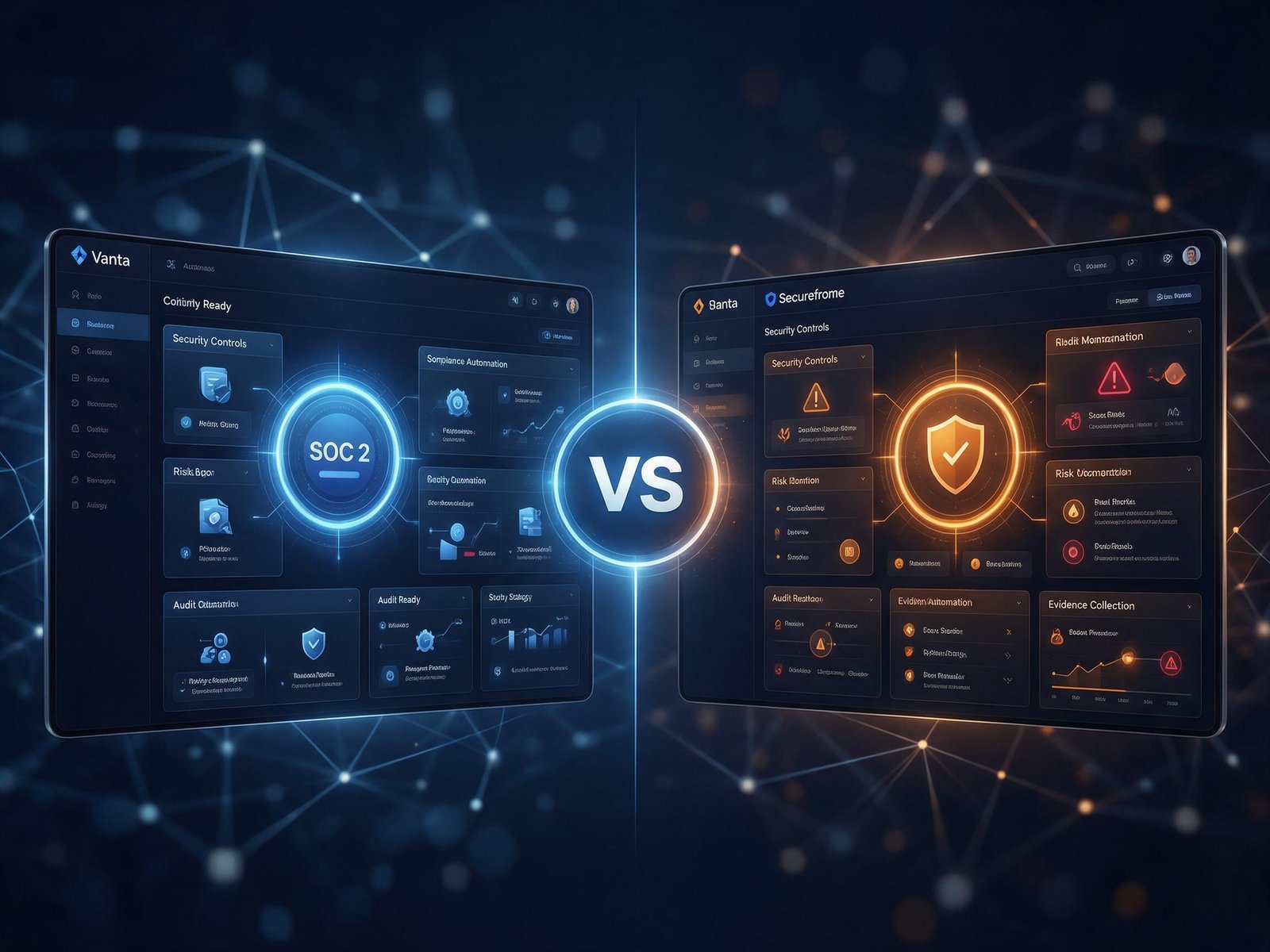
Well, compared to healthcare or financial services, startups are typically smaller and more agile, meaning they have fewer people and less time to invest in compliance management. Moreover, healthcare or financial institutions tend to have more regulation and compliance-based processes in place. In other words, SaaS companies are not a good fit for the traditional GRC software stack, where evidence is manually collected in spreadsheets and reported for SOC 2, ISO 27001, or other standards. The software-as-a-service business model is all about automation, so it makes perfect sense that their compliance management solutions also involve automation. Companies like Vanta, Drata, Secureframe, and thousands of others have emerged to provide automated compliance solutions that are SOC 2 compliant by design.
What do they have in common?
Compliance-as-a-service solutions are built around the idea of collecting evidence directly from AWS, GCP, Azure, and other cloud infrastructures as well as the HRIS tools.
They also tend to offer continuous monitoring and SOC 2 and ISO 27001 controls, pre-built reports, and faster preparation for audits. These tools are not focused on enterprise-grade GRC software capabilities but rather on automating compliance management for faster SOC 2 audit readiness.
How to Choose the Right GRC Software Regardless of Industry Essay (Critical Writing)
No matter which industry you are in, there are several evaluation criteria that remain the same:
Define the framework you need covered first – and research whether the software you are considering has built-in templates for standards such as HIPAA, SOC 2, PCI-DSS, or SOX, which you may need to adopt.
Consider the ability to integrate with your existing infrastructure, as a GRC tool that requires you to spend hours entering evidence manually into the system will be a burden rather than a boon.
Look at the quality of the audit trail the tool produces, as this is what your auditors will review.
Scalability is also a significant concern – a tool that is helpful at an employee count of 15 may not be easy to implement when you reach an employee count of 100, if at all.
For more information on how different tools vary in terms of price, company size, and compliance standards, see our complete guide to compliance software for growing companies that goes more in-depth on the subject.
Conclusion
There is no one GRC platform that will perform best across all industries, and any article attempting otherwise is oversimplifying a complex issue. Healthcare organizations have unique needs centered around HIPAA compliance, financial institutions and fintech companies will want a GRC tool with deep audit and monitoring capabilities, and SaaS companies should prioritize an SOC 2-ready platform with wide automation possibilities.
The right choice is always contextualized and depends on the nuances of the firm’s operations, but a tool’s ability to integrate with the existing tech stack and cover control categories relevant to the organization should always guide the selection. The most common pitfalls involve relying too heavily on review site rankings and making assumptions about the tool’s ability to fulfill the exact requirements of one’s regulatory framework.
Frequently Asked Questions
Does GRC software differ from compliance management software, or are they the same thing?
Compliance management software covers a broad category of tools that help an organization stay within the bounds of the relevant regulatory frameworks. Some GRC platforms allow for granular control compliance management, and the two terms refer to closely related sets of software. Within the last few years, the distinction between the two became blurred as GRC vendors began to offer a broader range of compliance management tools.
How much does GRC software cost for a small/mid-size company?
The cost of GRC software varies dramatically depending on the relevant regulations and the company’s size within the industry. Midsize companies usually pay between $5,000 and $25,000 annually for a decent GRC tool, and the price can go as high as six-figures for an enterprise-level solution. Most entry-level SaaS GRC vendors utilize a low-cost strategy, with Vanta and Drata being some of the most well-known examples.
Does a small SaaS company need GRC software, or is it a waste of money?
Unless an organization has enterprise-level sales, there is little point in investing in a GRC platform. Everything below the enterprise level tends to require just months to come up with the appropriate documentation for an SOC 2 audit, and such a tool would be appropriate if the company intends to sell to large organizations.
Can a single GRC platform cover multiple frameworks, or should one pick a vendor for a specific standard?
The former is possible and is, in fact, the most common use-case for GRC software. A properly designed tool allows one to map controls against the frameworks and select the ones relevant to their operations. The most common example of multiple standards applied within a single organization is SOC 2 and HIPAA, but they usually involve a company that operates in several capacities.
What is the single worst mistake a company can make while selecting a GRC platform?
Beyond the irrelevant factors, such as the reputation of the vendor, the primary pitfall is single-minded pursuit of the highest score on any given review site. Software as complex as GRC rarely lives up to the expectations of a technically sophisticated buyer, and there is no substitute for reading through the documentation and ensuring that the product can be implemented without months-long delays.


Pingback: Get SOC 2 Certification in 2026: Step-by-Step Process, Cost & Timeline - MONETICKS
Pingback: Payroll Service Providers for Small Business vs. DIY Payroll: Which Saves More Money? - MONETICKS
Pingback: Regulatory Compliance Software: Can AI Automatically Track Every Regulatory Change That Affects Your Business in 2026? - MONETICKS
Pingback: Vanta Competitors in 2026: Which Platform Is Better for AI Governance and SOC 2? - MONETICKS
Pingback: SOC 2 for Startups: AI Compliance Tools vs. Consultants — Which Costs Less in 2026? - MONETICKS
Pingback: Regulatory Compliance Software: Can AI Automatically Track Every Regulatory Change That Affects Your Business in 2026? - MONETICKS